When people think of natural landscapes, one of the first things that comes to mind is forests. Forests occupy one-third of the Earth’s land surface and are very important for maintaining ecological balance. However, not all countries have forests. One of the most prominent examples is Qatar, a small country in the Middle East that is famous for its large deserts and not for its green landscapes.The environment in Qatar is characterised by extreme climate conditions, low rainfall, and a unique geography. It is almost impossible for forests to grow in such a country. The landscape is dominated by sand dunes, rocky plains, and sparse desert vegetation. However, despite the absence of forests, the country has come up with innovative ways to manage its environment and make it green through the use of modern technology.
Why Qatar has no natural forests
The primary reason for the lack of forests in Qatar is the desert climate. The country receives extremely low levels of rainfall, which is usually below 100 millimetres. Forests need consistent levels of rainfall and soil for the growth of many trees, which are not naturally available in Qatar.Another reason for the lack of forests in Qatar is the high temperatures. During summer, the temperatures in Qatar are often higher than 40 degrees Celsius. The high temperatures make it difficult for many trees to grow, especially those that are naturally found in forests.Another reason for the lack of forests in Qatar is the soil. The soil in Qatar is not suitable for forests. The country has many sandy and rocky terrains, which are not conducive to forests. Forests need deep soil for the growth of many trees.
The geography of Qatar’s desert landscape
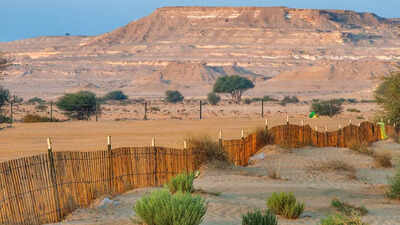
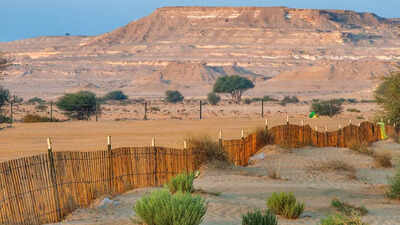
Qatar is situated on the northeastern side of the Arabian Peninsula and is bordered by the Persian Gulf on three sides. Qatar is a comparatively small country and is mostly flat, with a desert landscape covering most of the area.The topography of Qatar is dominated by dunes, gravel plains, and limestone outcrops. Vegetation is sparse and of the desert type. Low-growing shrubs and robust plants that can grow in low water conditions are found in these regions.The coastal regions may support salt-tolerant vegetation and mangrove forests, which serve as nesting grounds for birds and fish. But these regions do not support forests as they do not have the dense growth of trees found in forests.
How Qatar is adding greenery without forests
Although Qatar does not have forests, it has made significant efforts to increase greenery within the country. The country has implemented various projects aimed at increasing greenery within urban centres.One such method is the planting of drought-resistant tree species, which can thrive in desert environments. Some of the tree species include the acacia and ghaf trees, which need less water to grow compared to other forest species.Qatar has also developed irrigation systems that utilise treated wastewater for the growth of greenery. This enables vegetation to grow within the country, as rainfall is scarce within the region.In the past few years, the country has developed various initiatives aimed at enhancing environmental sustainability within the country. Although the initiatives do not focus on forests, they have helped increase greenery within the country.
Wildlife and ecosystems in Qatar
However, despite the fact that there are no forests in Qatar, there are different species of wildlife that have adapted to living in the desert environment. The different species of wildlife found in Qatar include gazelles, desert foxes, reptiles, birds, and many others.Other birds found in Qatar include those that migrate from different parts of the world as they move from one continent to another. These birds are found in Qatar in their natural habitats, especially in the wetlands and coastal regions of Qatar.The desert environment, despite the fact that it is perceived to be a barren environment, has different species of flora and fauna that have adapted to living in the desert environment.
Environmental challenges and sustainability efforts
As in other countries that are located in arid regions, Qatar is not spared in terms of environmental challenges, which are associated with issues of water scarcity, climate change, and desertification. Water scarcity has made it difficult to cultivate more vegetation and carry out farming activities due to insufficient water resources.For Qatar to address environmental challenges, the country has invested in green technology that is aimed at helping Qatar maintain its vegetation, especially in urban areas, through the establishment of desalination plants, green energy, and recycling plants.Environmental awareness campaigns are becoming very instrumental in Qatar, especially in the context of environmental conservation.
A unique landscape shaped by climate
The lack of forests in Qatar is a good example of how climate and geography impact the natural environment in a country. Forests are common in many parts of the world, but deserts are quite unique in terms of their ecosystems and adaptations for survival.Qatar’s landscape, even without the presence of forests, is unique in terms of the impact of extreme weather conditions, lack of water, and centuries of natural evolution. Today, Qatar is still exploring ways to balance environmental sustainability in terms of its desert ecosystems.