
NCP (SP) MLA Rohit Pawar joined The Indian Express‘s Mumbai office for a wide-ranging discussion about his relentless push for a criminal investigation into Ajit Pawar’s death, the delay in registering an FIR, and why he has begun doubting his own profession. He also reflected on the fractured state of the national Opposition and what it must do differently before 2029. Excerpts:
Rohit Pawar: If we do it as a party, it will be seen as a political issue. As for Sharad Pawar, he has largely stayed away from the media, but when he speaks, he will share his intent and he is someone who cannot be influenced. The other leaders have supported me in their own way, as their statements show. But I am not someone who holds back just because others don’t join me. I also have people’s support, without which neither the media would cover it nor would the government feel pressured.

Q: But don’t you want your party leaders to be as vociferous as you on this issue?
Rohit Pawar: This issue is extremely critical and complex. Unless you fully understand it, you cannot speak about it. If you speak without proper knowledge, you may push it in the wrong direction. It is a social, political, and emotional issue, and not many are willing to take the risk of speaking on either side.
I met Rahul Gandhi in Delhi and we spoke for nearly 40 minutes. Being a pilot, he understood how planes function. After a detailed discussion, he raised a key point: why was an FIR not being registered? He said if no FIR would be filed in Maharashtra for a leader who worked for the state for 40 years, why not approach another state where justice can be sought?
Q: So you went ahead and filed a Zero FIR in Karnataka, which the Maharashtra CM did not seem to appreciate…
Rohit Pawar: The Chief Minister had a misconception about Zero FIR, but I presented all the documents and explained the rules. If Karnataka had conducted the investigation itself, that would have been incorrect. Instead, they transferred the case to the DGP of Maharashtra.
I also asked the CM why the case had not been transferred to the CBI. He said it would be, that he had spoken to Union Home Minister Amit Shah and was waiting for an investigation report. But if they are referring to the AAIB ( Aircraft Accident Investigation Bureau) report, that is a technical investigation under the DGCA that examines what went wrong to prevent future incidents. The CBI and CID conduct criminal investigations. Conflating the two suggests confusion about the nature of the probe.
Beyond this, it appears that VK Singh (director of Delhi-based VSR Aviation which managed the aircraft Ajit Pawar was in) and his company have personal connections with the Union Civil Aviation Minister, and there are attempts to protect him. This raises the suspicion of a criminal angle. Had the FIR been registered within two or three days, and had the CM and Deputy CM assured full support for justice, this would not have escalated. The delay, the lack of proper investigation, and the perceived protection of the aviation firm are what raised serious concerns.
Q: The family — Sunetra Pawar, Parth, Jay — have they been with you on this?
Rohit Pawar: In the first 13 days after his passing, I met them and told them I had doubts and would be making presentations. They gave me their approval. Jay also called me later and tweeted. He was to give a presentation as well, but didn’t and I don’t know why.
Q: But are you open to an investigation concluding there was no conspiracy? That it was, maybe, human error or negligence?
Rohit Pawar: My only demand is a transparent investigation. If there is no conspiracy, that is fine. But without an investigation, how can we rule out the possibility of one? So far, there has been no FIR, no CID investigation, which only needs to examine the criminal angle, not the technical details.
The Bihar government sent its proposal for a CBI probe in the Sushant Singh Rajput case and it was accepted by the Centre the very next day. It has been almost 58 days since Ajit Dada’s accident. The state government sent its proposal 42 days ago and it has not been accepted to date. The doubt is only growing.
In the last two months, I have seen so much that I have started doubting whether I am in the right profession. So much dirty politics has taken place. In Ashok Kharat’s case (Nashik ‘godman’ arrested on allegation of sexually exploiting women), an SIT was formed and within 10 days a lot came out. That is a good thing. But in this case, it takes two months just to begin an investigation.
Q: There is speculation that the BJP actively worked to prevent a merger between the two NCPs. What is your reading?
Rohit Pawar: Merger is one part of it, but you need to understand why it was being discussed at all. Ajit Dada lost his father at 18, and (Sharad) Pawar Saheb took care of him like a son and the bond was deeply emotional. Breaking away was a difficult decision, taken for several reasons. After the assembly election, he was the first to say let’s come together, that emotionally he couldn’t take it anymore. He also felt certain people in his party were not behaving as they should.
Only he and we knew the exact terms and whether we would join his party within the BJP alliance, or whether he would come out and fight against the BJP. Now that he is gone, that question no longer arises. The emotional thread that held it together is gone.
Q: Merger or no merger, can you see the two NCP factions aligning on specific issues or have those bridges been completely burnt?
Rohit Pawar: I don’t see us coming together (merging) in the next two to three years. On issue-based cooperation, it may happen. If we are protesting against, say, the shortage of gas supply, and Sunetra tai or Eknath Shinde Saheb want to join us against the BJP, we will welcome them.
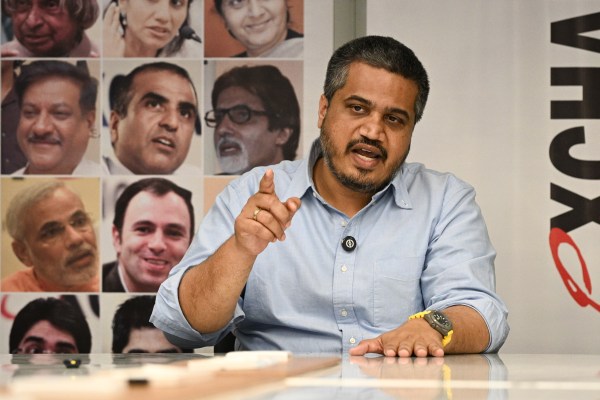 NCP (SP) leader Rohit Pawar. (Credit: Sankhadeep Banerjee)
Q: There is no LoP in Maharashtra, no merger on the horizon, which means you are staying in opposition. What is the plan for the next three years?
Rohit Pawar: People will have to fight against the system. If we are struggling just to register an FIR, imagine what ordinary people go through every day: from filing a police complaint to getting admissions, fee reimbursements, and scholarships. The system grinds them down constantly.
The politics I have witnessed is deeply troubling. If people with money, administrative clout, and every other kind of power keep getting elected, we need to seriously rethink what politics should look like. Personally, I will go to the public and ask them: what kind of politics do you want?
A Leader of the Opposition must be appointed in both Houses (of Maharashtra) as soon as possible. But it should be someone who will actually fight, not someone comfortable with the BJP.
Other than that, ultimately, the youth will have to take the call. Gen Z is coming in and they are not afraid. In this age of Hindu-Muslim rhetoric and caste division, only the new generation can change the direction. They have to take charge.
Q: What do you think is ailing the Opposition at this point, that it is not able to take on the party in power effectively, nationally?
Rohit Pawar: The aspiration of every party. Nobody wants to lower their seat count. Every party will try to maximise benefits for its candidates, but personal aspiration cannot be stretched beyond a point. Everyone needs to come together and have a better discussion about it. I feel Rahul (Gandhi) ji can definitely lead such a discussion.
That said, opposition parties in Maharashtra too are not functioning as they should. Some MLAs are already managed by the BJP; others are confused and slow to figure out how to fight such entrenched power. Occasionally, MLAs do speak up. But for the opposition to work, they need to stand together with a united front.
Q: How do you see the equation between the CM and Eknath Shinde? It often seems like Shinde is playing the Opposition’s role.
Rohit Pawar: Look at the (Nashik ‘godman’ Ashok) Kharat case. The target, evidently, was Shinde’s party, but Ajit Dada’s party has ended up as collateral damage. There is definitely an internal war. If the formal opposition is not doing its job, the Opposition within the government certainly is. Everyone is now working with an eye on 2029. The honeymoon period between the ruling parties is over and the rough patch has begun. The next three years will be a test. Unless something big and surprising happens in Delhi in 2027. That could change everything.
Q: You said Rahul Gandhi should lead discussions within the Opposition. But some INDIA alliance partners have called for a change in leadership. Do you agree?
Rohit Pawar: Pawar Saheb is the right person from our party to speak on this, and he will address it better than I can. To comment on leadership, you need to be at a certain level. But if you ask me personally: yes, I am a fan of Rahul Gandhi ji. I think all the senior leaders need to come together, reach a consensus, and focus on fighting the BJP.
Q: Apart from Rahul Gandhi, who else do you think can help rally the Opposition nationally?
Rohit Pawar: If you ask me to name someone who can consolidate the opposition, it is Sharad Pawar. No one will question his intent. He will not say he wants the top job, but he is someone who can bring parties and leaders together.
Q: Has there ever been a proposal suggesting Sharad Pawar as Opposition leader?
Rohit Pawar: No. I named him because you asked for a name other than Rahul Gandhi. The priority should be to first fight, win, get the majority, and then discuss what comes next. If we start fighting over the PM face before that, it will only lead to chaos. And in terms of pan-India following within the opposition, Rahul Gandhi remains the highest.
Q: Outside of money power, what is the BJP getting right that the Opposition is not?
Rohit Pawar: Election machinery and voter management. I am not talking about EVM management. In the last two elections, parliamentary and assembly, plus the Special Intensive Revision, a large number of voters were added in the final phase of registration and then immediately removed. They have a system for this.
Second, the BJP has a strong organisational structure of karyakartas and booth-level workers. Third, they get solid support from the RSS, which is very good at creating confusion among communities. The Maratha-OBC debate in Maharashtra is a good example. RSS workers went door to door and deepened the divide. That directly helped the BJP.
Being in power also helped. Schemes like Ladki Bahin Yojana gave women Rs 6,000 in advance over three to four months. In a household with three families, that was Rs 18,000 in official funds at one go. The same playbook was used in the Bihar assembly polls.
And then there is delimitation. Look at what happened in Assam. Constituencies were redrawn from compact shapes into straight lines spanning 100 to 150 km. Minority voters, Adivasis, community concentrations were all carefully calculated while redrawing boundaries.
In Maharashtra, they are already at work, studying constituency-wise voter shifts and reservation changes. In Mumbai, it happened during the BMC polls. In Pune and Pimpri-Chinchwad, constituencies were broken up to favour the BJP. They have hired officers who conducted the 2011 delimitation exercise, vetted them for political inclination, and are now planning the same for the next Lok Sabha and Vidhan Sabha elections. Their planning is meticulous.
Q: Given the strengths you have listed, what should the Opposition do nationally to counter them?
Rohit Pawar: We should be doing the same things. Look at what happened during the SIR in Bihar and West Bengal. In Maharashtra, we are still sleeping. (In Maharashtra and other states) We should have started working on this already, collecting data on how the census will alter constituencies. But our approach is “hawa pe chalna.” In the last Lok Sabha election, had we worked harder, we could have made it to power at the Centre. Unfortunately, we are underprepared. We only get going when the moment is upon us. That is our mistake. We need to start working now.