However, the return of human beings to deep space is not just about powerful rockets and advanced navigation systems. Rather, it is also about managing the most basic human needs in an environment where nothing behaves as it does on Earth. NASA has recently launched the Artemis II mission, which is the first human mission to orbit the Moon in more than five decades. This mission is considered to be an important step towards human exploration of the Moon. However, even in this highly advanced mission, the most surprising factor was the malfunction of the spacecraft’s toilet system. The matter may not be highly significant, but it does provide an interesting insight into the realities of life in space.
Minor toilet glitch reported in Orion spacecraft during Artemis II mission
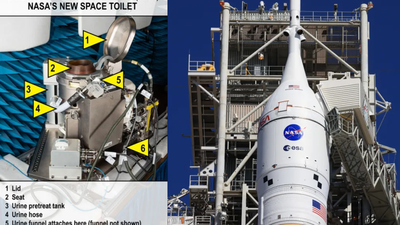
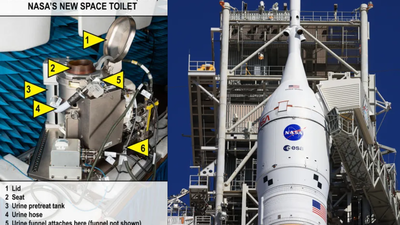
During the initial days of the mission, the astronauts encountered a minor problem with the Orion spacecraft’s toilet system, also known as the Universal Waste Management System (UWMS). The problem was reportedly associated with the airflow or the mechanism within the system to guide the waste in the microgravity environment.In the microgravity environment, a minor change in the airflow has a significant impact on the collection and storage of the waste. Unlike on Earth, where gravity works in favour of the toilet system, the toilet system in the microgravity environment solely depends on the suction system. “The toilet fan is reported to be jammed,” NASA spokesperson Gary Jordan explained in commentary of the live mission. “Now the ground teams are coming up with instructions on how to get into the fan and clear that area to revive the toilet for the mission.”Though the problem was minor and did not affect the astronauts in a significant manner, it was necessary to monitor the situation. The presence of a backup system ensured the smooth journey of the astronauts.
Why toilet systems are so critical in space
On the surface, a faulty toilet might not seem to be a big deal. However, in a confined and isolated environment such as a spacecraft, such a system is a necessity to maintain hygiene and comfort, and ultimately the health and well-being of the crew.In a microgravity environment, waste will not naturally move away from the body. So, a faulty system might lead to a high risk of contamination. According to NASA’s human research programme, a clean and controlled environment is a necessity to maintain the physical and psychological health and well-being of the crew.Short missions such as the Artemis II mission rely on such a system. So, a faulty system, however minor, might impact the daily routines and the morale of the crew. This comes at a time when NASA plans to send astronauts on long-duration missions, where such a system must be failure-proof.
How space toilets work without gravity
The Orion spacecraft toilet is another improvement on previous designs used for Apollo missions. Unlike before, where there were just bags for disposing of waste, there are now airflow mechanisms for directing waste into containers.This is based on studies on astronautical general and applied hygiene, which assert that there is a substitute for gravity in the management of waste so that it does not float in space.There are fans, hoses, and compartments in the toilet, all of which are meant for use in weightless space. Although this has improved efficiency and hygiene in the management of waste, there are now more parts that can fail compared to before.
What this issue reveals about living in space
The Artemis II toilet issue serves as a reminder that space exploration is built on constant learning. Each minor glitch will provide beneficial information for engineers to make better systems in the future.As NASA continues to venture into longer missions, such as establishing bases on the moon or even reaching Mars, waste management systems will have to function properly for long periods of time. Even a minor glitch in the present can prove to be beneficial for avoiding larger issues in the future.Although the situation involving a malfunctioning toilet on the Artemis II may seem comical at first glance, there is a human side to space exploration. There is a world beyond the moon missions where everything matters, such as oxygen or toilet usage. NASA continues to explore new boundaries for humanity, and these small issues will play a significant role in shaping the future of life beyond Earth.