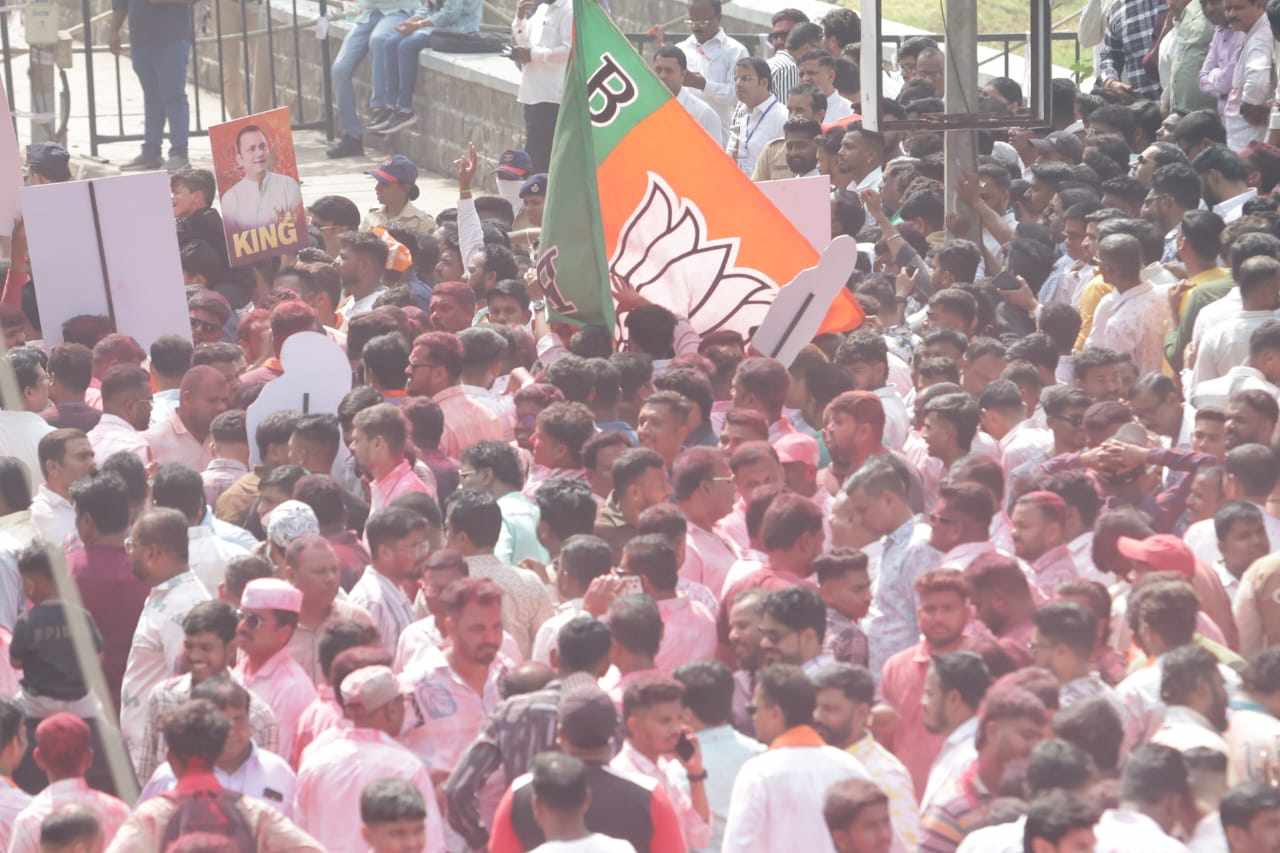
While the BJP on Monday emerged as the clear frontrunner in Zilla Parishads across Maharashtra, the results also revealed that the two NCPs – the Nationalist Congress Party (NCP) led by Deputy CM Sunetra Pawar and NCP(SP) chief Sharad Pawar – which contested most seats in alliance on a common symbol reaped rich dividends.
According to the State Election Commission (SEC), the BJP won 225 of the 731 seats across 12 districts in the Zilla Parishad polls while the NCP emerged victorious in 165. The Shiv Sena led by Deputy Chief Minister Eknath Shinde bagged 162 seats. The NCP (SP) won 43 seats.
The results assume significance for the NCP as they come weeks after the death of former Deputy CM Ajit Pawar. That derailed attempts at rapprochement between the two parties.
For the BJP, which won six of the 12 Zilla Parishads and 50 of the 125 Panchayat Samitis, the results reinforce the party’s growing footprint across the state, especially in rural areas which were hitherto seen as the strongholds of the NCP and Congress.
“The BJP has established itself as the number one party in Maharashtra. The mandate reflects acceptance across rural and urban areas,” chief Minister Devendra Fadnavis said, adding that alliance partners Shiv Sena and NCP had also performed well.
The BJP emerged as the largest party in Zilla Parishads in Chhatrapati Sambhajinagar, Solapur, Parbhani, Sindhudurg, Satara and Dharashiv, while the Shiv Sena won Raigad and Ratnagiri, and the NCP secured Pune and Kolhapur.
In the 2017 Zilla Parishad elections, the BJP won 141 of the 727 seats while the NCP (then undivided) won 217 and the Shiv Sena (undivided) bagged 148 seats. The Congress emerged victorious in 126, while others bagged 72 seats. A total of 23 Independents had won the Zilla Parishad polls.
Story continues below this ad
In the 2017 Panchayat Samiti polls, the BJP had won 284 seats in the 125 Panchayat Samitis that saw polls.
What worked for NCP
The decision of the two NCPs to fight the polls together in Pune and coordinate seat-sharing in at least 10 other districts seems to have helped them revive their rural performance, particularly in western Maharashtra, long considered their traditional stronghold.
The rural local body arrangement was widely seen as a precursor to a formal merger between the groups led by Ajit Pawar and his uncle Sharad Pawar. Pawar senior earlier said an announcement on the merger was scheduled for February 12, after the declaration of the Zilla Parishad results.
Party sources said Ajit had pushed for both the alliance and the merger, arguing that the split in votes was shrinking the political space of the two parties, an assessment the results in western Maharashtra appear to validate.
Story continues below this ad
“The decision was taken by the senior party leadership to contest together or have an understanding on seat-sharing. It has helped the party considerably,” an NCP (SP) MLA said.
In Pune, the NCP was the single-largest party with an absolute majority in the 73-member Zilla Parishad, winning over 40 seats. Both groups contested on the common “Clock” symbol, barring a few friendly contests in Ambegaon. The strategy appears to have consolidated votes and delivered a clear majority.
After setbacks in the recent municipal corporation elections, talks between the two parties gained momentum, with Pune — the Pawar family’s home turf — chosen as the testing ground. In January, NCP (SP) state president Shashikant Shinde announced that the two sides would contest the rural local body polls together.
A similar approach yielded results in Kolhapur, where the NCP emerged as the single largest party in the 68-member Zilla Parishad with 20 seats. The Congress won 15, the BJP 13, and the Eknath Shinde-led Shiv Sena nine. The Mahayuti is expected to support an NCP nominee for the Zilla Parishad president’s post.
Story continues below this ad
In Sangli, although no formal alliance was announced, the two NCP factions contested on mutually agreed seats. The NCP (SP) won 19 seats to emerge as the largest party, followed by the Congress with 11. The BJP secured 15 seats, while the NCP won four. The NCP (SP) is likely to form the Zilla Parishad with Congress support.
In Satara, too, the NCP maintained an understanding with its allies and won 18 seats, emerging as the second-largest party.
Overall, the results suggest that Ajit Pawar’s strategy of coordination and common symbols in rural local body elections strengthened the party’s position, particularly in western Maharashtra.
What did BJP do right?
The BJP emerged as the single-largest party in Zilla Parishads in Chhatrapati Sambhajinagar, Solapur, Parbhani, Sindhudurg, Satara and Dharashiv, while the Shiv Sena won Raigad and Ratnagiri.
Story continues below this ad
BJP Minister Chandrashekhar Bawankule said the verdict had reaffirmed the party’s organisational strength, quoting former Prime Minister Atal Bihari Vajpayee: “BJP ka karyakarta kabhi harta nahi — ya toh jeetta hai, ya seekhta hai (A BJP worker never loses. He either wins or learns).”
Unlike the 2024 Lok Sabha and Assembly campaigns, where polarising slogans were prominent, CM Fadnavis emphasised development in villages, towns and cities during the local body polls. Sources said even though the CM cancelled 30 scheduled rallies across 12 Zilla Parishads and 125 Panchayat Samitis following Ajit’s death, he closely monitored the party’s preparations.
The BJP also deployed its state chief Ravindra Chavan along with a team of workers to tour the districts. “We have a dedicated cadre from the booth to the state level whether it is a Lok Sabha seat or a Panchayat Samiti. They work with the same zeal and purpose in every election,” Chavan said, adding the party undertook a door-to-door campaign.
The results come as a setback for the MVA with the Congress and Shiv Sena (UBT) faring poorly. The MVA was hoping to capitalise on Maratha discontent to check the BJP’s growth, especially western Maharashtra and Marathwada.
Story continues below this ad
The Congress won just 55 of the 731 seats while the Sena (UBT) and NCP (SP) won 43 and 26 seats respectively.
