
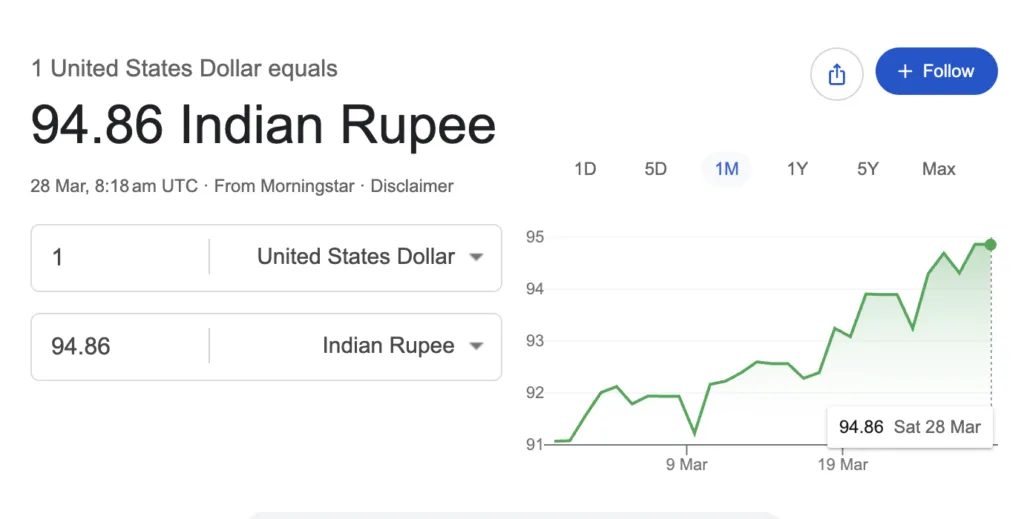
The Indian Rupee is falling sharply against the US Dollar. 1 US Dollar = Rs.94.86. This has created a big economic concern for the country.
Now, the Reserve Bank of India (RBI) has taken an important step to control the sharp fall in the Indian rupee. On March 27, the RBI told all banks to limit their Net Open Position in the rupee (NOP-INR) to $100 million by the end of each working day.
What does this mean?
Banks often buy and sell foreign currencies like the US dollar. The difference between what they buy and sell is called their net open position. If banks hold too many dollars expecting profit, it can increase pressure on the rupee. Now, RBI is saying:
- Banks cannot keep large open positions in dollars
- Their exposure must stay within $100 million daily
- This rule will start from April 10
The RBI is trying to protect the rupee from falling too fast. By limiting how much foreign currency banks can hold, it wants to reduce speculation and bring stability to the market.
Why has RBI taken this step?
The RBI is worried about the fall in the value of the rupee and high volatility in the currency market. Some key reasons for fall of Indian Rupee are: Rising crude oil prices (Brent crude), the ongoing war in West Asia and heavy selling by foreign investors.
Because of these factors the rupee has fallen about 4% since late February. In the current financial year, it has fallen more than 10%. This is the biggest fall since 2011–12.
What will this move do?
According to experts:
- It will reduce speculative buying of dollars by banks
- It may prevent sharp falls in the rupee
- It will help bring stability in the currency market
What is NOP-INR?
NOP-INR (Net Open Position in Indian Rupees) is a rule used by RBI to control how much risk banks can take in foreign currency trading. Earlier Banks could decide their own limits but they had to keep it within 25% of their total capital. Now RBI has set a strict fixed limit of $100 million.