3 min readNew DelhiMar 24, 2026 06:25 AM IST
First published on: Mar 24, 2026 at 06:25 AM IST
The Centre is exploring the possibility of delinking the Women’s Reservation Act, 2023 — which seeks to reserve one-third of seats in the Lok Sabha and state Assemblies for women — from the impending Census and delimitation exercises, and learnt to have suggested that the strength of the Lok Sabha be raised from the current 543 to 816, including 273 seats reserved for women. A reconfigured Lok Sabha would only come into force in the 2029 Lok Sabha polls.
As reported by The Indian Express on Monday, at the meeting with some Opposition parties Union Home Minister Amit Shah suggested amending the Act and separately raising the total strength of the Lok Sabha while maintaining the current proportions of seats allotted to each state. However, delimitation or redrawing seat boundaries is expected to be pegged to the 2011 Census.

Going by the current state-wise allocation of seats, Uttar Pradesh by far has the highest proportion of Lok Sabha seats: 15% or 80 of the total 543. If this proportion is to be maintained in an 816-member Lok Sabha, UP will have 120 seats, including 40 reserved for women.
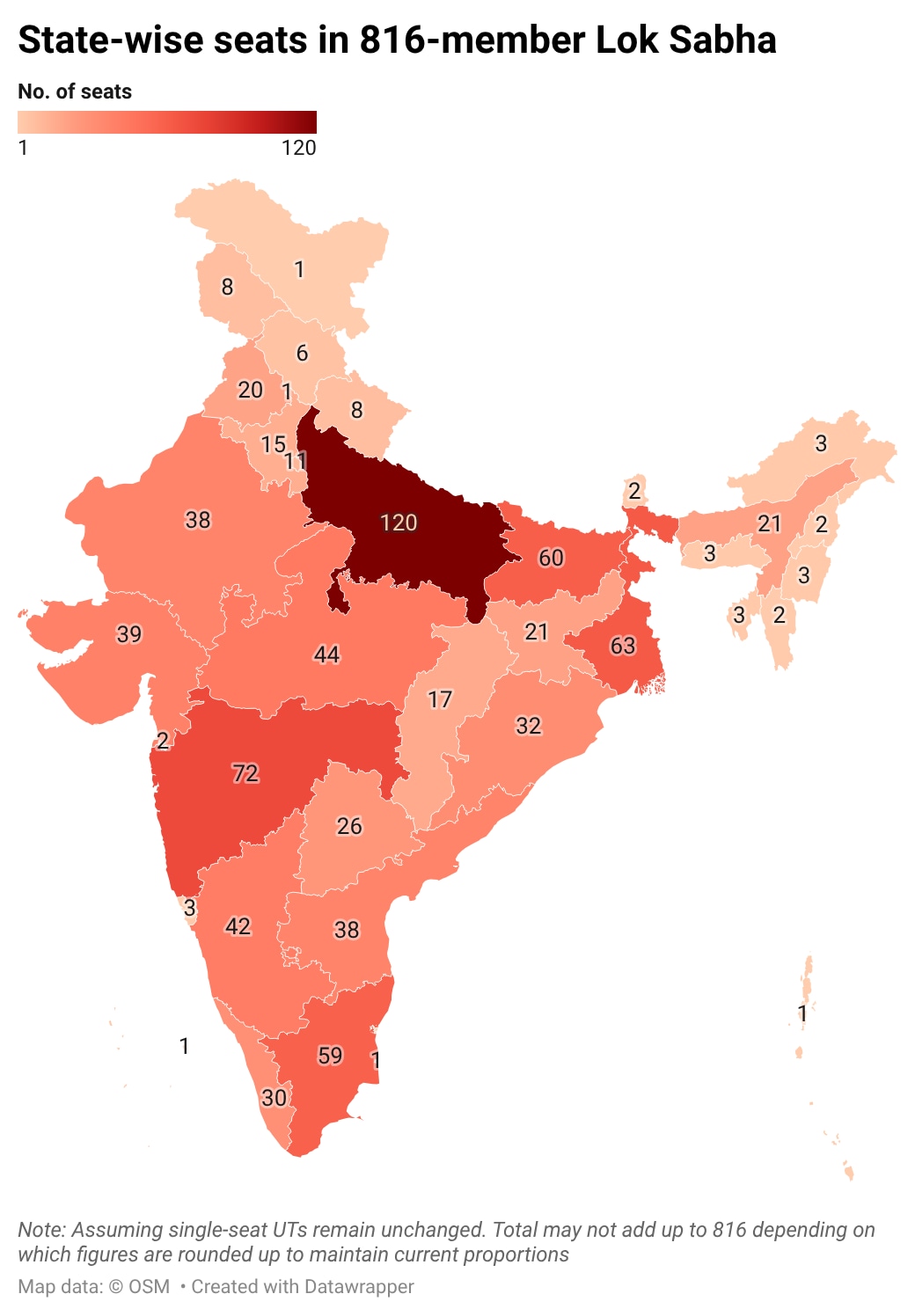 State-wise seats in a 816-member Lok Sabha
Similarly, Maharashtra will go from 48 seats to 72, including 24 reserved for women, Bengal will go from 42 to 63 seats, with 21 for women, and Bihar will go from 40 to 60 seats, including 20 reserved for women. In Tamil Nadu, where the DMK has led the charge against the state’s alleged underrepresentation in Parliament, the number of Lok Sabha seats will rise from 39 to 59, with 20 seats reserved for women. Madhya Pradesh, meanwhile, will rise from 29 seats to 44 with 15 seats for women.
Among the smaller states, Arunachal Pradesh, Goa, Manipur, Meghalaya, Tripura could go from 2 Lok Sabha seats to 3 each. Mizoram, Nagaland and Sikkim, which each have 1 seat, could have 2 seats each in the new Lok Sabha configuration.
Among the major Union Territories, Delhi could rise from 7 Lok Sabha seats to 11 with 4 reserved for women, while Jammu and Kashmir would rise from 5 to 8 seats with 3 reserved for women. However, it remains unclear if the single-seat UTs, including Ladakh and Puducherry among others, will see an increase in the number of seats and how they may be reserved for women.