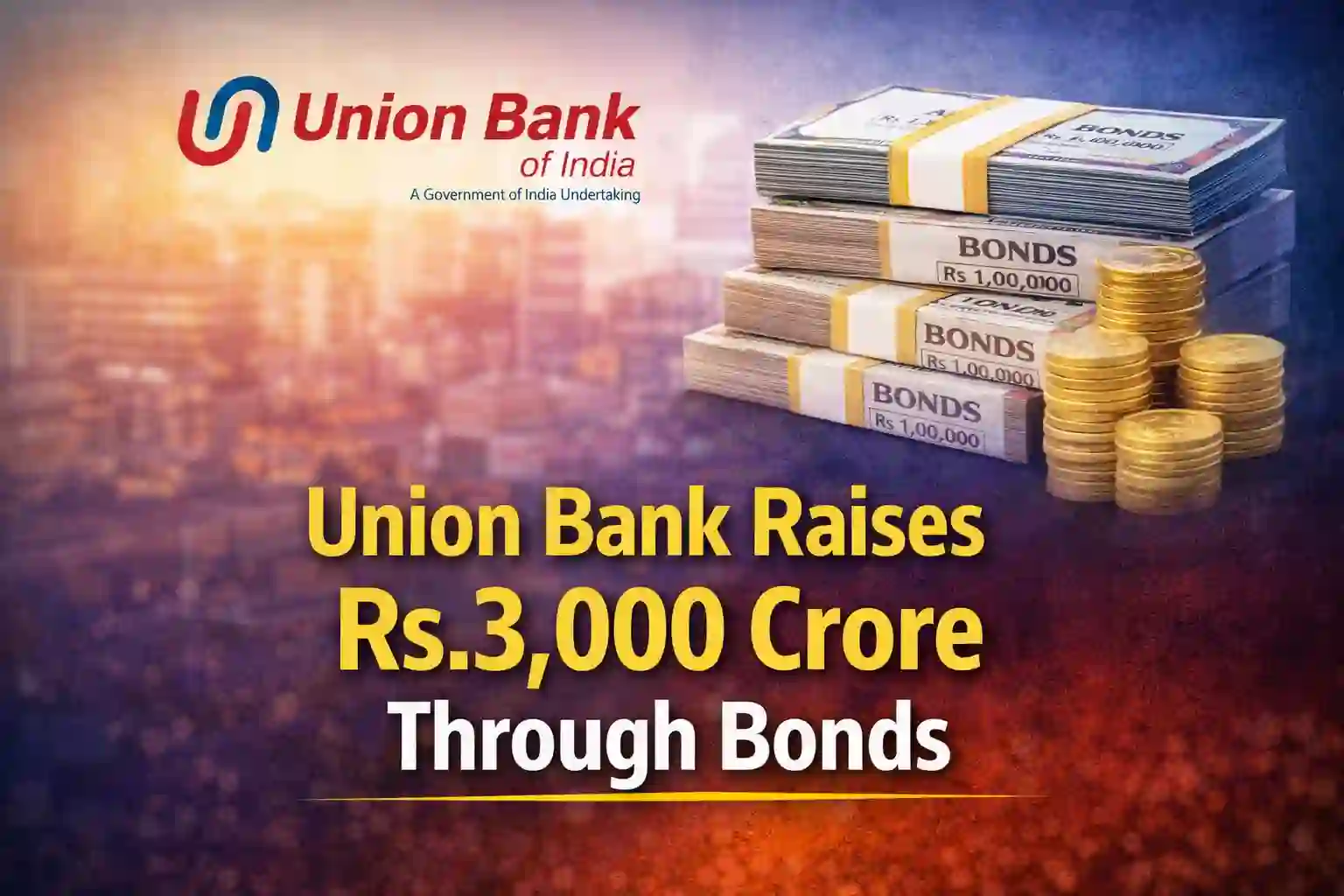
In a major fundraising move, Union Bank of India has raised ₹3,000 crore through the issuance of long-term bonds to finance infrastructure and affordable housing projects. The bank shared this update in a regulatory filing dated March 20, 2026.
The bank had planned to raise up to ₹7,500 crore, including a base issue size of ₹3,000 crore and a green shoe option of ₹4,500 crore. The bonds were issued through private placement to institutional investors.
According to the bank, the issue received a strong response from Qualified Institutional Buyers (QIBs). The total bids received were ₹9,379.82 crore, which means the issue was oversubscribed by 3.12 times compared to the base issue size.
Despite the high demand, Union Bank decided to accept only ₹3,000 crore, sticking to the base issue size. The bonds were issued at a coupon rate of 7.16% per annum, which is the interest rate investors will earn.
The bonds are classified as senior, rated, listed, unsecured, redeemable, taxable, and transferable non-convertible debentures (NCDs). A total of 3,00,000 bonds were issued, each having a face value of ₹1,00,000.
These bonds are classified as Non-Convertible Debentures (NCDs) with the following features:
- Senior: Higher priority in repayment
- Rated: Credit rating assigned by rating agencies
- Listed: Can be traded on stock exchanges
- Unsecured: Not backed by any specific collateral
- Redeemable: Repaid after a fixed period
- Taxable: Interest earned is taxable
- Transferable: Can be transferred to other investors
These bonds help banks raise funds for long-term projects like infrastructure and housing.
The issue was opened and closed on the same day, March 20, 2026, and the date of allotment has been fixed as March 24, 2026. The bidding process was conducted through the NSE Electronic Bidding Platform (EBP).
The bank received 48 bids in total, out of which 14 bids were accepted. This fundraising will help Union Bank strengthen its lending capacity, especially in key sectors like infrastructure and affordable housing. The bank disclosed this information under Regulation 30 of SEBI (LODR) Regulations, 2015, ensuring transparency for investors and stakeholders.