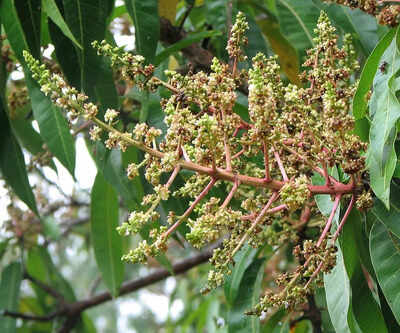
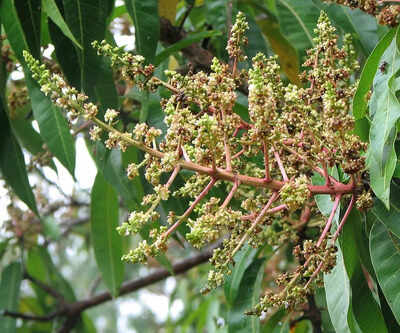
In the heart of home gardens and orchards in India, you are likely to spot this common picture: the tall and dense mango tree, normally laden with fresh green leaves, suddenly laden with bunches of fresh and tender flowers, broom-like. These flower panicles may resemble soft brushes, gently swaying in the spring breeze. But for the keen and attentive home gardener or farmer, this picture is not just meant for appreciation and wonder, but also for being alert because flower and fruit drop is a common and economic problem in mango cultivation. It is also what makes or breaks a fruitful crop for the farmer.
The real reason mango trees produce ‘broom-like flowers’
Mango trees, classified as Mangifera indica, are strong and long-lasting plants that may attain 15–20 meters in height or more, with a broad and dense foliage structure as a consequence of continuous branching. From the main trunk and the strong branches, smaller twigs emerge carrying long and sprawling flower panicles resembling soft brooms, filled with hundreds of small blossoms. Extension notes from the agricultural sector describe the natural process of the plant as follows:“The natural process of the plant is to produce far more blossoms than it needs, and only a small percentage of these blossoms have the potential to be valuable fruit if left alone.”Tamil Nadu Agricultural University, for mango planters in India describe the flower panicle of the mango tree as a group of blossoms measuring from a pinhead to a pencil tip in size, in which multiple stages of development occur on the same twig, making it easy for weak and overcrowded blossoms to fall off. The first thing a farmer should do upon seeing the broom-like flower panicles is to keep a cool head and be vigilant, as the numerous blossoms may be hiding the fact that most of these are destined to fall off without the farmer’s attention.
The problem of flower and fruit drop: Why you should be on alert
Several details from the National Horticulture Board and local farmer‑education sites highlight that flowers and fruit falling from the mango tree are a major worry for orchardists, often more damaging than pests like mango hoppers. According to experts, the process of reducing the amount of fruit can be described in three stages:
- The dropping of the pinhead-sized fruits
- The dropping of the pea-sized young fruits
- The dropping of the fruits later on
According to the materials provided, the reason for the reduction can be natural, but can be influenced to a certain extent by human factors like:
- Poor pollination
- Extreme temperatures
- Water stress
- Sudden winds
- Flowers and fruits can be too crowded on the same branch
The same article written on horticulture and the proper management of the mango flower wrote: “Thinning of unnecessary panicles and overcrowded flowers to allow the tree’s energies to be directed to the healthiest and most promising fruits. The puffiness of the flowers, how ‘broom-like’ they are, actually tells the grower to be on the lookout for proper pruning and support.”
What you can do to avoid brush-like blossoms
When the tree is covered in such brush-like blossoms, there are some simple and practical steps that farmers can take:Examine the panicles. “If they are long and dense and growing off of one branch, it can help to thin or shorten parts of the cluster to help the tree support the fruit it already has.”Make sure to keep the tree well-watered and well-fed on a regular and consistent schedule. “A tree that is stressed from too little water or nutrients is not only weaker itself but also more likely to cause immature flowers and fruit to fall off the tree.”
Some low-cost methods that farmers can undertake:
- Prune the twigs bearing the blossoms and remove the weaker panicles before they reach full bloom. This can help to alleviate overcrowding and make the blossoms that remain of better quality.
- Growth regulators such as NAA (naphthalene acetic acid) can be applied to the tree at different stages to control premature fruit fall. The use of these growth regulators is generally employed in large-scale farming and is done after proper training of the farmers.
The consensus of these sources is that a tree covered in such a brush-like blossoming of flowers is beautiful to look at, but it needs to be looked at and taken care of as well.